

Are Cheaper Essential Oils Just as Good as Expensive Brands? | LEMNYL

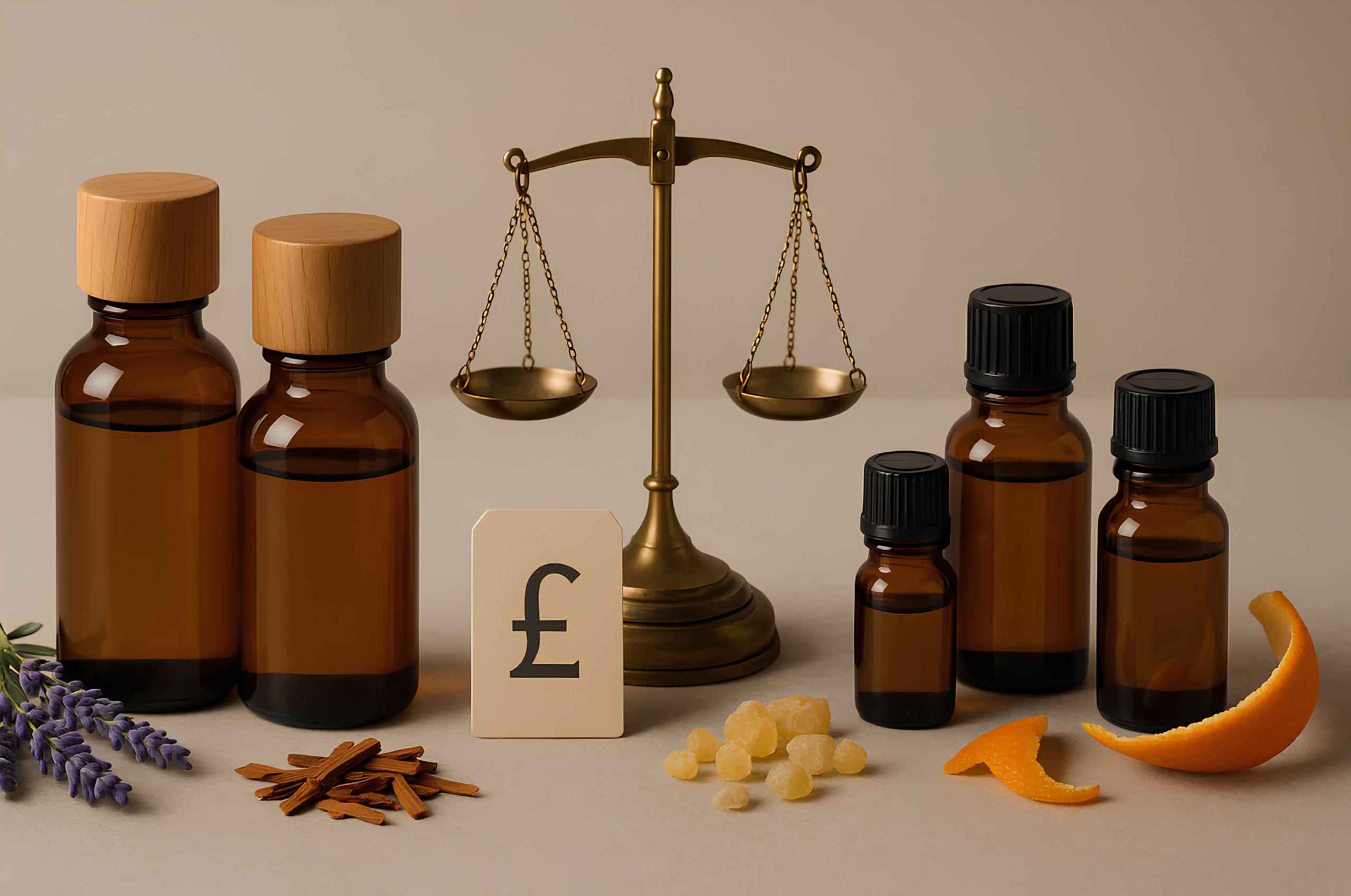
Is the price difference between essential oils worth it? We reveal what actually drives quality and why some cheap oils are pure while some expensive ones aren’t. An honest guide by LEMNYL.
Are Cheaper Essential Oils Just as Good as Expensive Brands? (What Nobody Tells You)
You’re browsing for Lavender essential oil and the price range is baffling. One bottle costs ₹150. Another costs ₹1,500. Both claim to be “100% pure,” both smell vaguely floral, and both have a nice enough label. So what exactly are you paying for and is any of it real?
This is one of the most common questions in the essential oil world, and it deserves a genuinely honest answer. Not a sales pitch. Not a scare tactic. Just the facts about what actually separates a quality essential oil from one that isn’t.
The Short Answer: Price Alone Tells You Nothing
A high price does not guarantee a pure, quality essential oil. And a low price does not automatically mean a bad one.
What price does tell you is that producing genuine, pure essential oils has real costs and when a price falls dramatically below what those costs allow, something has to give. That something is almost always purity.
The question is not “cheap or expensive?” The right question is: what’s actually in the bottle?
Why Essential Oil Prices Vary So Dramatically?
To understand the price gap, you first need to understand what goes into making a real essential oil.
Plant yield matters enormously. It takes approximately 4 kilograms of Lavender flowers to produce just 20ml of Lavender essential oil. Rose essential oil requires roughly 4,000kg of petals for a single litre – which is why genuine Rose oil commands extraordinary prices. Eucalyptus oil and Lemongrass, by contrast, yield more readily, which is why they are naturally more affordable.
Extraction method affects cost. Steam distillation, the gold standard for most essential oils requires energy, time, and equipment. Cold pressing (used for citrus oils) has its own process costs. Solvent extraction is cheaper but leaves residues. The method used directly impacts both cost and quality.
Geography and sourcing drive price. Lavender from Provence, France and Lemongrass from Kerala have very different supply chains. Import costs, agricultural conditions, and farming practices all feed into the final price.
Quality testing is not free. Legitimate purity testing particularly Gas Chromatography-Mass Spectrometry (GC-MS), the industry standard costs money per batch. Brands that invest in it price that cost into their product. Brands that skip it do not.
When you see an oil priced so low that none of these costs could possibly have been covered, that is your first real signal.
What “Cheap” Usually (But Not Always) Means?
Not every affordable oil is bad. Some brands simply operate efficiently, source smartly, and pass savings to the customer without compromising purity. LEMNYL was built on exactly this principle genuine quality at a price that doesn’t require a luxury markup to justify.
But in a market with limited regulation, cheap oils frequently signal one of three things:
1. Adulteration with Carrier Oils
The most common form of fraud in the essential oil industry is diluting a pure essential oil with a cheap, odourless carrier oil coconut, mineral, or synthetic and selling it as “100% pure.” A ₹150 Lavender oil may contain 5% actual Lavender and 95% diluting agent. You are paying essential oil prices for cooking oil.
2. Synthetic Fragrance Oils Sold as Essential Oils
This is even more widespread than most buyers realise. Synthetic fragrance oils are laboratory-made chemical compounds that mimic natural aromas. They are dramatically cheaper to produce than extracting oil from actual plants, they smell convincing to an untrained nose, and they are legally sold in India without restriction as long as they are not falsely labelled as natural essential oils. Many are. These oils carry none of the genuine properties of plant-derived oils and, for skin application, can cause significant irritation.
3. Low-Quality Plant Material and Poor Extraction
Even if an oil is genuinely plant-derived, the quality of the source plant and the integrity of the extraction process vary enormously. Oils extracted from poor harvests, old crops, or via rushed distillation carry fewer of the beneficial compounds that make essential oils worth using in the first place.
What “Expensive” Doesn’t Always Mean Either
An honest guide has to say this clearly: a premium price tag is not proof of purity. The essential oil market includes brands that charge luxury prices based on packaging, marketing, and brand prestige rather than meaningful differences in the oil itself.
Some of the most expensively branded oils on the market use the same distilled plant material as mid-range brands, wrapped in designer bottles and sold through multi-level marketing structures that add cost at every layer.
Price is a signal. It is not a guarantee.
The 5 Things That Actually Determine Essential Oil Quality
Forget the price. These are the markers that genuinely indicate a quality oil:
1. The Botanical Name on the Label
A trustworthy essential oil label will list the full Latin botanical name of the plant — not just “Eucalyptus oil” but *Eucalyptus globulus*. This specificity indicates the producer knows and cares about exactly what plant was used. Generic labels without botanical names are a warning sign.
2. The Extraction Method
Steam distillation is the preferred method for most oils and should be stated on the label. LEMNYL lists this on every product page it is not an accident. Knowing the method tells you the oil was produced with a process that preserves the plant’s natural compounds rather than degrading or contaminating them.
3. The Plant Part Used
Tea Tree oil comes from leaves. Geranium oil from leaves and stems. Lavender from flowers. Knowing which part of the plant your oil comes from and verifying it matches what the plant actually yields — is a sign of transparency. Brands that list this information are brands with nothing to hide.
4. Country of Origin
The geographic source of an essential oil directly affects its chemical composition. French Lavender and Bulgarian Lavender have genuinely different aromatic profiles. Indian Lemongrass is among the finest in the world. A brand that tells you where their oil comes from has done the sourcing work honestly.
5. Purity Testing – Especially GC-MS
Gas Chromatography-Mass Spectrometry (GC-MS) is the gold standard for verifying that an essential oil contains the compounds it should – and nothing it shouldn’t. When a brand makes their GC-MS results available, or states clearly that their oils are purity-tested, that is the strongest indicator of genuine quality. When a brand makes no mention of testing at all, ask yourself why.
Red Flags When Shopping for Essential Oils in India
India’s essential oil market is large, fast-growing, and in parts poorly regulated. Watch for these warning signs whether you’re buying online or in a store:
- Every single oil in the range is the same price. Jasmine and Lemongrass cannot legitimately cost the same. If all oils are ₹150, something is wrong.
- No botanical name on the label or product page. Transparency costs nothing. Its absence is a choice.
- “Fragrance oil” listed in the ingredients. This is not an essential oil. Full stop.
- No information about extraction method or plant part. Any serious producer knows this and shares it.
- Claims that the oil can treat or cure specific diseases. This is not just a quality red flag — it is an illegal health claim in India.
- Packaging that allows light through. Genuine essential oils degrade in UV light. Quality oils are stored in dark amber or cobalt blue glass. Clear bottles or plastic containers are a quality concern.
A Simple At-Home Quality Test
You cannot definitively test purity at home the way a lab can, but this basic check catches the most common form of fraud carrier oil dilution:
The paper test: Place a single drop of the essential oil on a piece of plain white paper. Leave it for 30 minutes, then hold the paper to the light. A pure essential oil will evaporate and leave no oily ring. A diluted or adulterated oil will leave a visible, greasy residue — just like vegetable oil on paper.
This will not detect synthetic fragrance oils, which can also evaporate, but it catches diluted oils reliably.
The Smart Buyer’s Rule
After all of this, the principle is actually simple:
Do not buy the cheapest oil on the market. Do not assume the most expensive is the purest. Buy from a brand that shows you exactly what is in the bottle and is not afraid to explain how it got there.
Transparency is the single strongest quality signal in this market. A brand that lists botanical names, extraction methods, plant parts, sourcing countries, and purity information on every product is a brand that has nothing to hide, because the oil itself is genuinely what it claims to be.
At LEMNYL, every essential oil in our range is 100% pure, steam-distilled directly from the named plant part, and free from synthetic additives, carrier oil dilution, and fragrance compounds. We list the extraction method and plant part on every product page because we believe you deserve to know exactly what you are buying.
That is not a premium , it is a minimum standard. And it is one we never compromise on.
Browse LEMNYL’s full range of 100% pure, transparently sourced essential oils → Shop Now
Frequently Asked Questions
Q: How can I tell if an essential oil is pure without a lab test?
The paper test (one drop on white paper – pure oils leave no oily ring after evaporation) catches carrier oil dilution. Beyond that, check the label for botanical name, extraction method, and plant part. Brands that provide this level of detail are far more likely to be selling genuine oils. The absence of this information is itself a warning sign.
Q: Why does Rose essential oil cost so much more than Lavender?
The yield difference is enormous. Rose essential oil requires roughly 60 roses to produce a single drop, making it one of the most expensive oils in the world to produce genuinely. If you see Rose oil priced similarly to Lemongrass or Eucalyptus, it is almost certainly synthetic or heavily adulterated. Genuine Rose oil should always be among the most expensive in any range.
Q: Are essential oils from large supermarket chains trustworthy?
It varies. Supermarket essential oils are often fragrance oils or heavily diluted products marketed using the language of aromatherapy. Some are genuine. Most are not. Check the label for botanical name, extraction method, and whether the product says “pure essential oil” or “fragrance,” “perfume,” or “aromatherapy blend.”
Q: Is it safe to buy essential oils from online marketplaces in India?
Some sellers on marketplaces like Amazon and Flipkart sell genuine oils, but these platforms also have significant volumes of synthetic fragrance oils and adulterated products. Look for sellers who list full botanical information, have verifiable reviews, and have a standalone brand presence (a website, social presence, and contact information). Buying directly from a brand’s own website gives you greater accountability.
Q: Does a higher price mean the oil will smell stronger or better?
No. Fragrance strength is often the reverse of purity – synthetic oils are engineered to have a very bold, immediate aroma, while pure essential oils can smell subtler and more complex, changing as they evaporate. If an oil smells almost aggressively strong and single-note, that can itself be a sign of synthetic composition.
Q: What does GC-MS testing mean and should I care?
GC-MS (Gas Chromatography-Mass Spectrometry) is a laboratory analysis that identifies every chemical compound in an essential oil and their concentrations. It confirms that the oil contains the right plant compounds and no adulterants. For a consumer, you don’t need to understand the results – you just need to know the brand bothers to conduct it. If a brand mentions GC-MS testing or makes results available, take that as a strong quality signal.
Final Thought: Quality Is Not About Spending More. It’s About Knowing More.
The essential oil market rewards informed buyers. Once you know what to look for on a label, you will never again be fooled by a price tag — high or low. Quality is transparent. It shows up in the details a brand is willing to share. And when those details are there, in plain sight, you can buy with genuine confidence.
Explore LEMNYL’s full range – every detail, every batch, nothing hidden → Shop Now
Disclaimer: This article is for informational and educational purposes only. LEMNYL’s essential oils are sold as wellness and aromatherapy products, not as medicines or medical treatments. Always follow proper dilution and usage guidelines before use.
