

What Essential Oils Smell Best Together? The Complete Blending Guide | LEMNYL

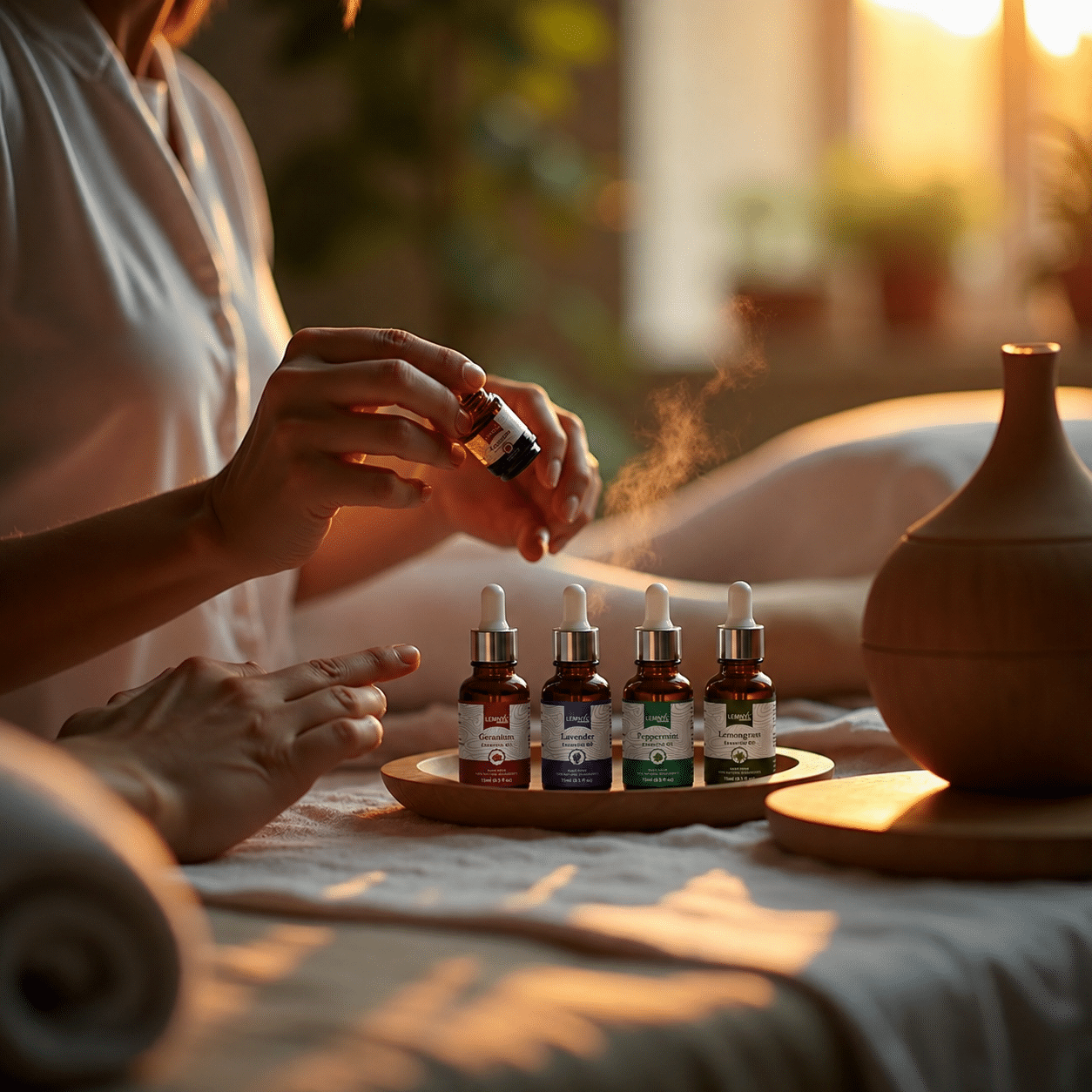
Discover the science of scent notes, which essential oil families blend perfectly, and 10 tried-and-tested blend recipes for mood, sleep, focus, and home freshness. India’s complete blending guide by LEMNYL.
If you have ever put two essential oils together in a diffuser and got something that smelled oddly flat, sharp, or just confusing – you are not alone. Blending essential oils is not complicated, but it does follow a logic. Once you understand that logic, you will never make a bad blend again.
The world of essential oil blending draws on the same principles that perfumers have used for centuries. It is about understanding how scents interact over time, which aromatic families naturally complement each other, and how to balance intensity so that no single oil drowns the others out.
This guide gives you everything you need – the theory, the ratios, and ten specific blends ready to use today, including two created specifically for India’s climate and seasons.
The Secret That Changes Everything: Scent Notes
The single most useful concept in essential oil blending is the idea of scent notes – a system perfumers use to describe how an aroma behaves over time. There are three tiers:
Top Notes – The First Impression
Top notes are what you smell immediately. They are the most volatile — they evaporate quickly and create the initial burst of scent. In a blend, they do the job of drawing you in.
Common top note oils: Lemon, Orange, Grapefruit, Peppermint, Eucalyptus, Lemongrass, Bergamot
Middle Notes – The Heart of the Blend
Middle notes are the soul of a blend. They emerge as the top notes fade and typically last the longest in a diffuser or on skin. They provide the dominant aromatic character.
Common middle note oils: Lavender, Geranium, Rosemary, Chamomile, Clary Sage, Nutmeg
Base Notes – The Foundation and Depth
Base notes evaporate last. They are rich, deep, and often woody or resinous. On their own they can feel heavy — but in a blend they anchor the lighter notes, add longevity, and give a scent its staying power.
Common base note oils: Sandalwood, Frankincense, Cedarwood, Vetiver, Patchouli, Myrrh, Tea Tree (soft base)
A well-crafted blend has all three. A blend of only top notes evaporates quickly and lacks depth. A blend of only base notes can feel heavy and airless. The ideal ratio for most diffuser blends is roughly 30% top notes, 50% middle notes, 20% base notes — though this is a starting point, not a rule.
Which Scent Families Blend Naturally Together?
Within the note system, essential oils also fall into broad aromatic families. Oils from the same family blend predictably well. Certain family pairings are classic. Others clash.
| Scent Family | Oils | Blends well with |
|---|---|---|
| Citrus | Lemon, Orange, Lemongrass, Bergamot | Floral, Herbal, Woody |
| Floral | Lavender, Geranium, Ylang Ylang, Rose | Citrus, Woody, Herbal |
| Herbal/Green | Peppermint, Eucalyptus, Rosemary, Tea Tree | Citrus, Woody, Spicy |
| Woody/Resinous | Sandalwood, Cedarwood, Frankincense, Patchouli | Floral, Citrus, Spicy |
| Spicy/Earthy | Ginger, Clove, Vetiver, Clary Sage | Woody, Citrus, Floral |
The pairings that almost always work:
- Lavender + anything (it is the great harmoniser of essential oils – almost universally compatible)
- Citrus + Mint (bright, clean, energising)
- Floral + Woody (depth and softness together)
- Eucalyptus + Lemongrass (fresh and purifying)
The pairings that often clash:
- Two heavy base notes together without a middle (e.g. Patchouli + Vetiver alone – overwhelmingly earthy)
- Multiple strong spice oils without balance (too aggressive)
- Floral + strong Herbal without a bridge note (Ylang Ylang + Rosemary, for example, compete rather than harmonise)
The Golden Blending Ratio
For a standard 100ml diffuser, a starting ratio of 6-8 drops total works well. For most blends of three oils, a reliable starting point is:
Top note: 2 drops – Middle note: 3 drops – Base note: 1-2 drops
For simpler two-oil blends: start at an even ratio and adjust by smell. The rule is always: add the heaviest or most powerful oil (usually the base or any strong single-note oil) last and in smaller amounts – it is far easier to add more than to correct an overpowering blend.
10 Essential Oil Blends That Actually Work
1. Deep Sleep Blend
For winding down, calming an overactive mind, and preparing for genuine rest.
- 3 drops Lavender (middle – floral, calming)
- 2 drops Geranium (middle – balancing, softly floral)
- 1 drop Frankincense (base – grounding, deeply settling)
Diffuse 30-45 minutes before bed in the bedroom. One of the most evidence-supported aromatherapy blends for sleep onset – Lavender’s effect on the nervous system and Frankincense’s grounding quality make this a consistently reliable combination.
2. Morning Focus Blend
For mental clarity, alertness, and a productive start to the day.
- 2 drops Peppermint (top – sharp, clarifying)
- 2 drops Eucalyptus (top/middle – opens airways, mental clarity)
- 2 drops Lemon or Lemongrass (top – bright, energising)
Diffuse at your desk or study space during the first hour of work. Peppermint has the most research behind it for improving alertness and concentration — this blend amplifies that effect with complementary citrus brightness.
3. Stress Relief Blend
For tension, anxiety, and unwinding after a demanding day.
- 3 drops Lavender (middle – calming)
- 2 drops Geranium (middle – uplifting and balancing)
- 1 drop Peppermint (top – cuts through tension)
A perfect balance: the Lavender and Geranium calm the nervous system while the trace of Peppermint keeps the blend from feeling heavy or soporific. Good for afternoons when you need to decompress but still stay present.
4. Fresh Home Blend
For deodorising, purifying the air, and leaving every room smelling clean and welcoming.
- 3 drops Lemongrass (top/middle – bright, deodorising)
- 2 drops Eucalyptus (top – purifying, clean)
- 2 drops Peppermint (top – fresh, repels insects)
Diffuse throughout the home for 30 minutes when you want the whole house to smell genuinely clean — not just perfumed. Excellent after cooking, during cleaning, or when guests are coming. The Lemongrass also acts as a natural insect deterrent — a significant practical bonus in Indian homes during summer.
5. Romantic Evening Blend
For intimate settings, creating a warm and sensual atmosphere.
- 2 drops Geranium (middle – floral, slightly sweet)
- 2 drops Lavender (middle – soft, calming)
- 2 drops Sandalwood or Cedarwood (base – warm, woody, sensual depth)
Woody base notes are the foundation of every classic perfume blend – they add the warmth and lasting quality that pure florals lack alone. This trio creates a sophisticated, unhurried atmosphere rather than an overtly heavy one.
6. Study and Concentration Blend
For long study sessions, exams, or deep work requiring sustained mental focus.
- 3 drops Peppermint (top – mental stimulant)
- 2 drops Rosemary (middle – studied for memory enhancement)
- 1 drop Lemon or Lemongrass (top – mood-lifting brightness)
Research into Rosemary and memory recall has produced some of the more interesting findings in aromatherapy science. Combined with Peppermint for alertness and a citrus top note for mood, this is LEMNYL’s recommended study blend for exam season.
7. Breathe Easy Blend
For congestion, cold symptoms, stuffiness, and closed-in spaces.
- 3 drops Eucalyptus (top/middle – opens airways)
- 2 drops Peppermint (top – decongestant)
- 1 drop Tea Tree (base – antimicrobial, purifying)
The most powerful respiratory blend in this guide. Diffuse during cold season, in poorly ventilated rooms, or when someone in the household is unwell. Not a treatment – a comfort and environmental support blend.
8. 🇮🇳 Monsoon Freshener — India Exclusive
For the unique challenges of the Indian monsoon: humidity odours, mildew risk, and that heavy, damp-air quality.
- 3 drops Lemongrass (top – cuts through humid air, repels mosquitoes)
- 2 drops Tea Tree (base – antifungal, fights mildew and humidity-triggered bacteria)
- 2 drops Eucalyptus (top – clears air, antimicrobial)
This blend was created specifically for the Indian monsoon – June to September, when homes become humid, mould begins in corners, and the air itself can feel heavy and stale. Lemongrass and Tea Tree together address the two main challenges simultaneously: odour and microbial activity. Diffuse twice daily during peak monsoon months. This blend is also highly effective as an ingredient in a floor cleaning solution – 10 drops each of Lemongrass and Tea Tree in a bucket of mopping water.
9. 🇮🇳 Summer Cool-Down Blend – India Exclusive
For India’s intense summer months — cooling the senses when the temperature climbs.
- 3 drops Peppermint (top – instantly cooling, menthol-driven temperature sensation)
- 3 drops Eucalyptus (top – opens airways, freshens air)
- 1 drop Lavender (middle – softens and balances the sharp mint intensity)
Peppermint’s menthol creates a genuine cooling sensation in the nasal passages and on skin, a perception of coolness that is meaningful when the air temperature is 44°C. Diffuse this blend in the afternoon when temperatures peak. For additional cooling, add 2 drops of Peppermint to a spray bottle of water, shake, and mist onto pulse points (wrists, neck, behind knees).
10. Skin Care Facial Blend
A balanced blend for the face – brightening, balancing, and gently clarifying.
- 2 drops Geranium (middle – balancing, toning)
- 2 drops Lavender (middle – calming, mild antimicrobial)
- 1 drop Tea Tree (base – blemish targeting)
Important: This is a topical blend, not a diffuser blend. Add these 5 drops to 10ml of a light carrier oil (Jojoba is ideal for the face). Apply as a face serum or facial oil after cleansing. Patch test first. This dilution of 1.5% is appropriate for facial use.
5 Blending Mistakes to Avoid
1. Using Too Many Oils at Once
More is not more in blending. Beginners often add five, six, or seven oils thinking more variety creates a richer result. Usually it creates muddy confusion. Start with two or three oils and add a fourth only when you understand how the first three behave together.
2. Ignoring Note Balance
A blend of all top notes is stimulating but fleeting – it evaporates within minutes in a diffuser. A blend of all base notes can be overwhelming and heavy. Always include at least one from each tier for a blend that evolves and lasts.
3. Overwhelming With the Dominant Oil
Some oils are dramatically stronger than others – Peppermint, Clove, Cinnamon, and Ylang Ylang are notorious for dominating a blend if used at equal ratios. Use powerful oils at half or a third of the quantity of the other oils until you understand their intensity.
4. Blending Directly Into the Diffuser
Blend your oils into a small dark glass bottle or vial first. Smell the combination before adding it to water. This allows you to adjust the ratio before committing to a full diffuser run. It also makes your tested blend repeatable – write down the ratio on the bottle.
5. Rushing the Smell Test
After adding oils to a blend vial, wait 10-15 minutes before final evaluation. Blends settle and evolve – what smells sharp immediately often rounds out beautifully once the top notes interact with the middle notes. Judge your blend the way a perfumer would: after it has had a moment to breathe.
How to Create Your Own Signature Blend
Once you are comfortable with the recipes above, creating something uniquely yours is genuinely enjoyable. Start here:
- Choose an intention – what do you want this blend to do? Calm? Energise? Freshen a room? Ground and centre you?
- Pick one anchor oil – the oil that defines the blend’s character. This will usually be your middle note.
- Add a top note – something that brightens or lifts the anchor oil.
- Add a base note – something that grounds and extends it.
- Start at 1 drop each – smell, adjust, let it settle, adjust again.
- Write everything down – the one certain way to lose a great blend is failing to record what you did.
Frequently Asked Questions
Q: How many drops of essential oil should I use in a blend for a 100ml diffuser?
A total of 6-8 drops of combined oils is ideal for a 100ml diffuser. More than this can overwhelm the space; less can mean an imperceptible result. For larger diffusers (200ml+), scale proportionally – 10-12 drops total.
Q: Can I blend different brands of essential oils together?
Yes – what matters for blending is the oil’s chemical composition and scent profile, not the brand. That said, blending low-quality or adulterated oils alongside pure ones will compromise your result, because the synthetic or diluted oil will not behave predictably. For best results, blend consistently pure oils like LEMNYL’s range throughout.
Q: How long does a blended essential oil last in a bottle?
A blend in a sealed dark glass bottle will last approximately as long as the shortest-lived oil in the blend. If you include a citrus oil (1-2 year shelf life), the blend is best used within that window. Without citrus, a well-stored blend can last 2-3 years.
Q: What is the simplest two-oil blend for a beginner?
Lavender and Lemongrass in a 3:2 ratio is one of the most reliably beautiful and easy beginner blends – floral softness balanced with citrus brightness. It works in a diffuser, as a room spray, and in cleaning solutions. It is also an extremely popular combination in India’s wellness community.
Q: Can I wear essential oil blends as a personal fragrance?
Yes, diluted in a carrier oil and applied to pulse points, a well-made essential oil blend makes a beautiful, natural personal fragrance. The Romantic Evening blend above (Geranium, Lavender, Sandalwood) translates particularly well to a personal fragrance oil. Always dilute to a maximum of 2-3% in carrier oil for wearable use.
Q: Do essential oil blends smell the same in the bottle and in a diffuser?
No, and this surprises many beginners. Diffusing disperses the oils into the air, where lighter top notes volatilise first and carry to you before the base notes do. This makes diffused blends smell lighter and more fresh than they do concentrated in the bottle. A blend that seems heavy in the bottle often diffuses beautifully.
Your Next Step: Start With Three
Blending can become a deeply satisfying creative practice – one that makes your home smell like you, not like a generic diffuser insert. But the way to start is not to read more. It is to open three bottles and begin.
Lavender, Lemongrass, and Eucalyptus – three of the most versatile and compatible oils in any range are all you need to make four of the ten blends in this guide. If you do not already have them, LEMNYL’s Introductory Kit is the natural starting point.
Shop LEMNYL’s complete range of 100% pure essential oils and begin blending today → Shop Now
Disclaimer: Essential oil blends in this article are for aromatherapy and personal wellness use. They are not medical treatments and should not be used to treat, diagnose, or prevent any health condition. Always dilute essential oils appropriately before skin contact. Keep out of reach of children and consult a healthcare professional before use during pregnancy.
